

When Soviets introduce poetry
and the search for Truth (an essay with poetry).

HVIEZDOSLAV’S LIBRARY,
established on the initiative of the President of the Republic Klement Gottwald on the 100th anniversary of the birth of Pavol Országh-Hviezdoslav, is a selection of Slovak classics who, through their struggle for freedom and humanity, became the creators of our present.
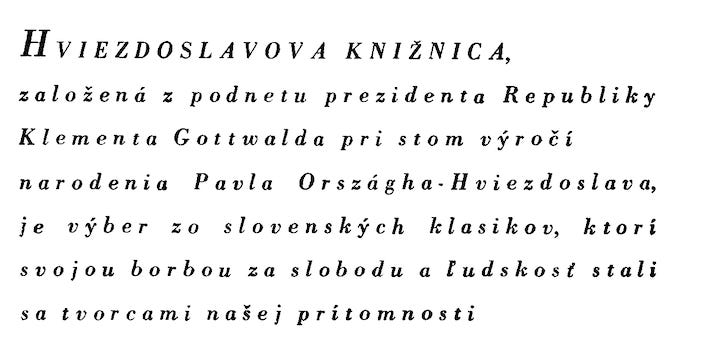
Thus begins the introduction to the 1952 edition of The Bloody Sonnets, published in then Soviet Czechoslovakia. But that introduction sounds almost democratic. One has to read the next page to get a better sense of the context:
We, the people of a new, bright epoch of history, children of revolutionary ideas and struggles, builders of smelters, chemical plants, dams, and electric lines, creators of boundless fields and gardens, conquerors of the inexhaustible wealth of nature, we, the generation of liberated labor, have achieved happiness that our fathers and grandfathers could not even dream of in this recently desolate, silent corner of the earth.
Ah, there we go. There’s the propaganda that even the American State of the Union can’t match.
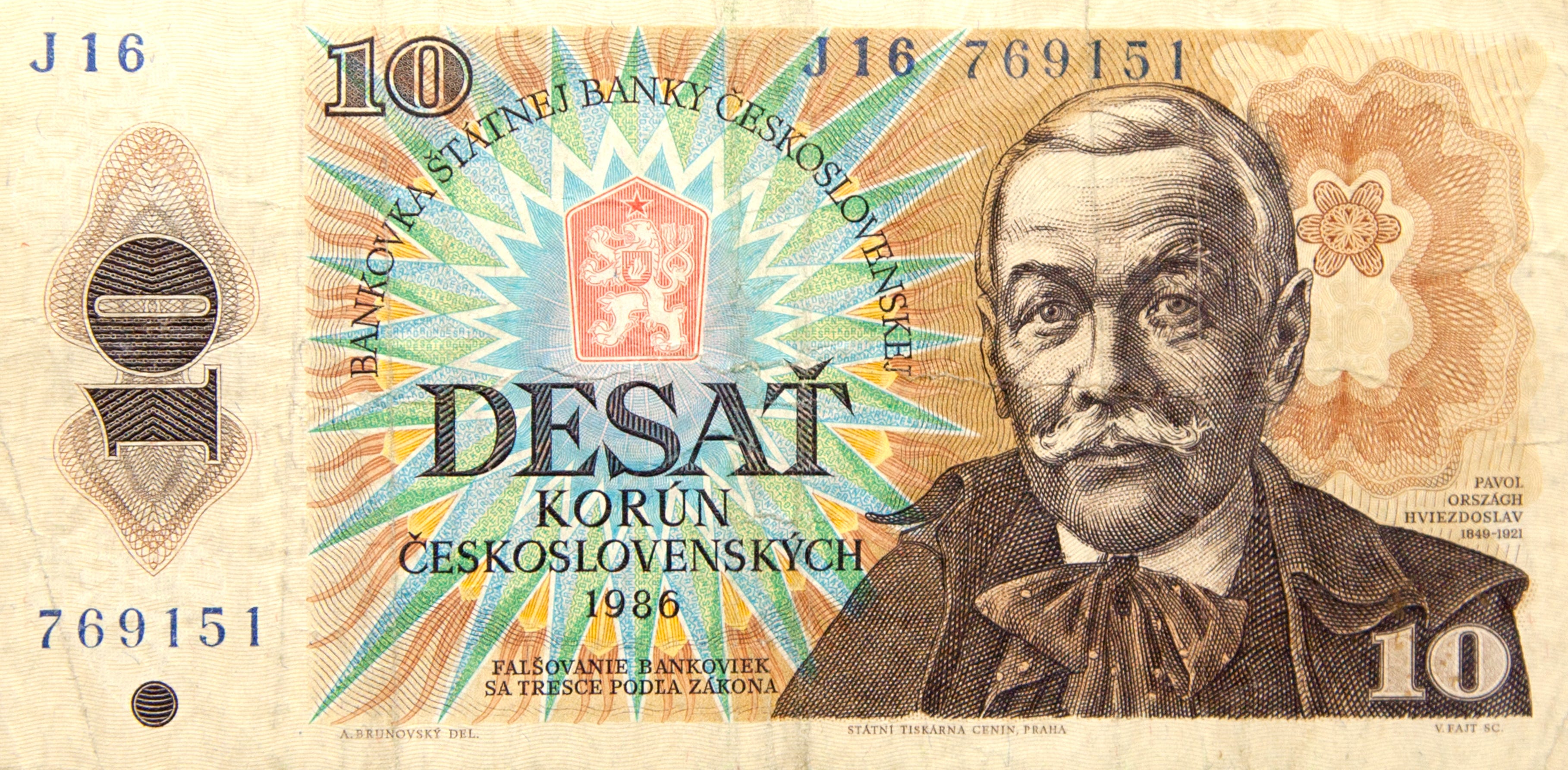
The Bloody Sonnets, as I introduced them in Wasted Blood, were written in August of 1914. Well before the great antiwar poets that come later in the Great War. Hviezdoslav does not publish them immediately as doing so would most certainly mean imprisonment. For those Americans puffing out their chest right now for the 1st Amendment, I should remind you that in 1918 the Sedition Act was passed (repelled in 1920). Which was:
An Act to punish acts of interference with the foreign relations, the neutrality, and the foreign commerce of the United States, to punish espionage, and better to enforce the criminal laws of the United States, and for other purposes.
The Bloody Sonnets are some of the most powerful antiwar poems from WWI. So how do the Soviets, in 1952, spin the meaning of these poems to fit their own agenda? First they provide an attack:
[the imperialists] are restoring the armaments industry in West Germany, they are recruiting shock regiments from the unemployed, they see before them the billions of dollars that they have accumulated, they see bloodshed as a profitable business for a handful of rich people. Their main settlement is America, America of businessmen, gangsters, the Ku Klux Klan, of immeasurable wealth and immeasurable poverty. They have bought newspapers, books, sell-out poets, professors, scientists. They think that with their radio they will succeed, like Joshua, in conquering foreign cities and passing through the collapsed walls into our streets to feast, kill and rob. The witness of their efforts is Korea, thousands of kilometers away from New York, which they have invaded in a despicable way. But nations that are going through a period of wars and proletarian revolutions cannot be intimidated, poisoned with poisonous propaganda, deceived. A powerful camp of peace defenders is rising, led by the Soviet Union.
I think this is well written propaganda. With many of these critiques of the West, I agree. But the technique here is to stack a series of valid critiques, to then sell the lie of the Soviets being peace defenders. But it continues:
We look to Moscow, over which the star of peace shines and illuminates the path ahead. To that Moscow, which was born amidst the roar of war, when the workers and peasants, under the leadership of their native Bolshevik party, under the banners of Lenin and Stalin, declared war on war.
The Slovak phrase for war on war is vojnu vojne, which also has a nice ring to it. At this point, the propaganda is a bit thick and goes on for a few pages. But we finally arrive at the introduction to the poet (emphasis mine):
He writes not for himself, but about the present in which he lived, for those present and those to come. And so, addressed to the turbulent present, the “Blood Sonnets” have become for us a sincere confession of anger at the squandering of human life and strength, of emotion at the multitude of wounds, of the devastation of centuries of merit.
They are not dead letters. They belonged and belong to the living people, not to the dead bourgeoisie. Their content pulsates and stirs our feelings, impressions, and thoughts. They transcended the boundaries of the Slovak horizon of the time with a genius that can only be found in the great poets of the world. Hviezdoslav became great because he spoke the truth.
This is one of the problems with Hviezdoslav today. Because for many Slovaks, who were forced to memorize these poems, Hviezdoslav is tied to the Soviet state. If I were to remove “not to the dead bourgeoise” I would agree with this entire segment. My title, Wasted Blood, is directly influenced by not only Hviezdoslav’s writing in WWI but my own experience in Afghanistan.
Finally, at page 14, we get into the poetry. What lines will the Soviets highlight? Unsurprisingly, they latch on to Hviezdoslav’s critique of Christianity. These are from my own translations in Wasted Blood, but the original Slovak is quoted in the 1952 preface.
For him, bloodshed is not God’s punishment, nor God’s judgment; he condemns and refutes the theological causes of war, he exposes the hypocrisy of priests and preachers. He criticizes sharply and directly:
You seek shelter in your sanctuaries,
but creep in your cathedrals.
Burn candles for the dead
while lighting the living on fire.

You are a missionary for the Light?
A mission to drug
nature's children with
the yoke of faith --
During Communism in Slovakia, the revolutionaries were the Catholics. They refused to worship the State and instead continued their protest by practicing their faith. So I believe this amplification of the hypocrisy of Christendom in WWI is purposefully highlighted to a Slovak audience.
And again, there is truth in this critique. When I see Pete Hegseth leading a prayer breakfast, saying the following, I do think of Sonnet #9:
The willingness to make sacrifices on behalf of one’s country is born in one thing: a deep and abiding belief in God’s love for us and his promise of eternal life.
But the Soviet introduction fails to highlight Sonnet #28, which starts like this:
No, my high-minded Pushkin,
you were wrong, sick with irritation.
You say our Slavic streams must merge into Russian seas
or else dry up —
regretful riverside reclamation.
He is referring to the Russian poet Alexander Pushkin, whom I’ve written about before. Hviezdoslav here is disagreeing with the Russian push for pan-slavism, that the ethnic slavs should merge into the Russian sea. An inconvenient sonnet for the Soviets no doubt. It is I think rationalized because Hviezdoslav did not know of the so-called glorious Russian revolution in 1914, which happens a few years later. As I understand it, had he have known, he clearly wouldn’t have written Sonnet #28 like that — so the party line goes.
It is nearly impossible to discuss war without involving economics, history, social issues, politics, natural resources, propaganda, and petty disagreements. War is the irrational destruction of humanity that is the opposite of its irrational adornment, which is love.
I enjoy nature poetry. But it sadly seems to be human nature to wage war. I am interested in exploring the natural world with poetry.
Werner Herzog, likes to misquote Clausewitz by saying: sometimes war dreams of itself. In his book, The Future of Truth, he talks about how the search for truth is what has driven many of his films. In it, he cites many examples of just how malleable the truth is. He quotes Jack Gallant (best read in Herzog’s unique accent):
a world expert on the human brain, [who] put it terribly simply: “There is no truth in the human brain.” That’s a sobering thought.
Scientists are basically agreed that our brain creates a model of reality; it doesn’t picture reality itself. Sometimes our brain cheats us, sometimes it is merely confused.
I wrote Wasted Blood because I think many people are in pursuit of the wrong truth. In this pursuit of truth, there are many facts, dates, timelines, quotes, leaked documents, historical grievances, land deeds, and on and on. I thought this was truth too. In reality, it is a ledger. Perfectly able to capture sums and debts. Except for that pesky accounting problem: what is the cost of human life? How many lives today are needed to balance the lives of yesterday?
I will leave you with the closing of the introduction, which is using loaded language from the days of Communism, and will leave it to you to decide its truth:
Hviezdoslav enters our days as a fighter for truth and peace.

Wasted Blood, which contains all of The Bloody Sonnets, is now available. On Friday (hopefully), I will make a digital version available as well.
Edit: I was correct that in 1952, “Soviet” is not the correct term, it should be “socialist.” So it was “Socialist Czechoslovakia” not Soviet. I will try to remember to update this article but I have to go through it and change the title, so until then, here’s the note.
Josh! I always learn so much. Today what hit me the most was, " ... the revolutionaries were the Catholics." I never thought of them in that way.
I hope all is well!
Thanks for sharing the history. I picked up my copy of Wasted Blood today. Looking forward to reading the Bloody Sonnets again in light of all the new knowledge I've picked up about them