

Cancel Memorial Day
The unvisited graves won't miss you

Why does America have a national holiday today?
Originally, this day was called Decoration Day. The purpose of this day was to visit veterans’ graves and decorate them with flowers. The tradition started around the civil war when about 700,000 American soldiers became residents of the grass.
If we aren’t going to honor this tradition, I say we strike this holiday from the national register. Surely we can find a better way to kick off summer.
The Memorial Day Order stated the purpose of the holiday as such:
Their soldier lives were the reveille of freedom to a race in chains and their deaths the tattoo of rebellious tyranny in arms. We should guard their graves with sacred vigilance. All that the consecrated wealth and taste of the nation can add to their adornment and security is but a fitting tribute to the memory of her slain defenders.
Let no wanton foot tread rudely on such hallowed grounds. Let pleasant paths invite the coming and going of reverent visitors and fond mourners. Let no vandalism of avarice or neglect, no ravages of time, testify to the present or to the coming generations that we have forgotten, as a people, the cost of a free and undivided republic.
Memorial Day is so far gone from the memory of Americans, it is necessary to remind ourselves why we even have this day.
Not many people visit graveyards these days, but in military graveyards, one might find poetry. Specifically a verse from Bivouac of the Dead, by Theodore O’ Hara.
The muffled drum's sad roll has beat
  The soldier's last tattoo;
No more on life's parade shall meet
  That brave and fallen few.
On fame's eternal camping ground
  Their silent tents are spread,
And glory guards, with solemn round,
  The bivouac of the dead.
But what good are these words to the dead in their graves and the citizens who don’t visit them? The Civil War was hard to ignore for Americans in 1861. Now, I’ve been told by some people I’m the only veteran they know. I can’t blame these people for their ignorance. But it points out the military-civilian divide. The United States has outsourced the duty of war, like it has outsourced food delivery to Uber Eats.
Do you know who the Uber Eats delivery person is? Nope. At best case, you can thank them for their service as they walk back to their car. Unknown and unseen. The best type of service.
Leave a rating: 5-stars, will request war again!
When you do see veterans, it is typically one of three kinds. The first is when they are being honored at an event. My hockey team will have a Veterans celebration. “Hometown Hero,” it’s called. They announce the veteran, who is usually standing with their family, and the audience claps for an extended period of time.
I can’t tell you the name of a single veteran who was honored. I just know I clapped, as did others.
The other veteran you might see is on the corner with a sign, begging for money. This veteran makes us uncomfortable. Here was a man willing to die for our freedom and is now asking for our help, so we ignore him. This is such an uncomfortable topic, I will move on. Nobody likes seeing homeless veterans, or talking about them, especially disabled ones.
The third veteran we love the most. The dead one. Because the dead veteran we can cover with the flag, and let the flag speak for them. The dead veteran, speaks with a unified voice of service, honor, and patriotism. The dead veteran, unlike the homeless one, we solemnly support. Memorial Day is a national holiday to the dead veteran. If only homeless veterans would become dead veterans, we could properly honor them the last Monday in May.
The dead veteran, unlike a troublesome one, does not make us uncomfortable.
Since we no longer respect the death of veterans, we no longer respect their lives. We send them to pointless wars so they can return to graves we refuse to visit. And yes, I’m aware there are individuals and groups that properly honor this day, but this is a national holiday, and as a nation these traditions are lost.
I am not asking for Americans to go out and put flowers on graves. That is too much a burden.
For me, there is only one grave I prefer to visit on this day, when I can. At one point, he was the most decorated Marine with two Medals of Honor. He is not buried in a military cemetery, because after he left the military, he dedicated his life to preventing the wasteful use of American life in foreign wars.
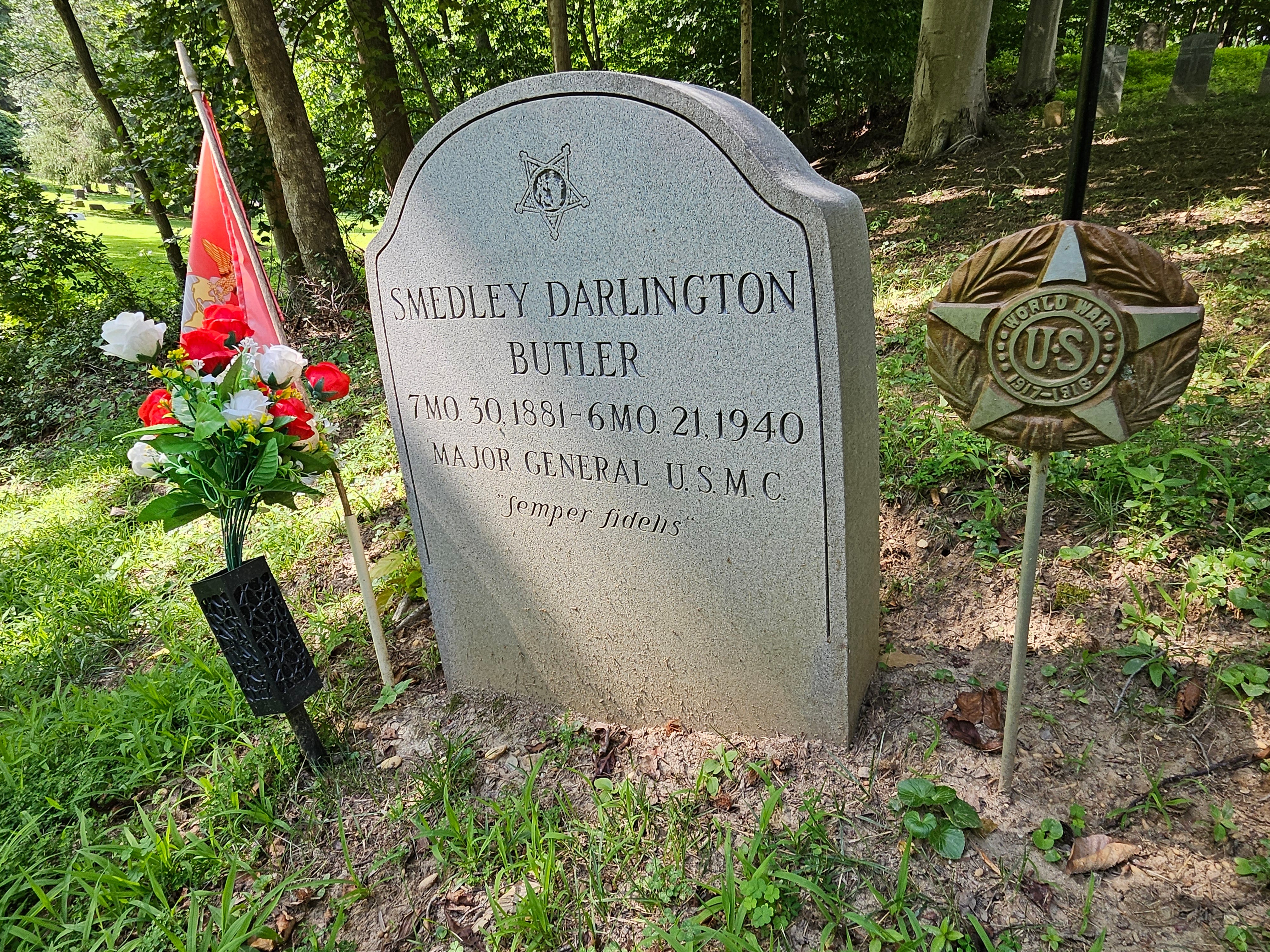
WAR is a racket. It always has been. It is possibly the oldest, easily the most profitable, surely the most vicious. It is the only one international in scope. It is the only one in which the profits are reckoned in dollars and the losses in lives.
How is it that someone as honored as Major General Smedley Butler, who spent over 30 years in the military, could say something like this?
The United States takes brave men and women, who nobly want to serve their country, and exploits them in wars of choice that serve politicians and corporations. Smedley Butler understood this especially after seeing the horrible treatment of veterans returning from WWI.
And this year, we have 13 new graves to visit from Operation Epic Fury.
How do we end this madness? Smedley Butler again:
Three steps must be taken to smash the war racket. 1. We must take the profit out of war. 2. We must permit the youth of the land who would bear arms to decide whether or not there should be war. 3. We must limit our military forces to home defense purposes.
The United States goes to war, a solemn and sacred act, on the will of the Executive branch alone. Sgt. Declan J. Coady, age 20, from West Des Moines, Iowa was the youngest service member killed in Operation Epic Fury. Was he permitted to decide whether or not there should be a war? The three steps that Butler called for in 1935 sink deeper into the ground with each war we wage.
Sadly, the precedent for American presidents to abuse their war powers has been set many presidents ago. Those thirteen men and women volunteered, knowing one day they might have to pay the ultimate price. They trusted, as did I once, that the civilian leadership of their country, and the American people, would not ask them to do so unless it was the last resort.
When Václav Havel becomes president of Czechoslovakia in 1989, after decades of socialism, he makes the following speech on January 1st, 1990. He starts with this:
My dear fellow citizens,
For forty years you heard from my predecessors on this day different variations on the same theme: how our country was flourishing, how many million tons of steel we produced, how happy we all were, how we trusted our government, and what bright perspectives were unfolding in front of us.
I assume you did not propose me for this office so that I, too, would lie to you.
Our country is not flourishing.
He goes into some history and the many problems facing this new nation. He continues:
But all this is still not the main problem. The worst thing is that we live in a contaminated moral environment. We fell morally ill because we became used to saying something different from what we thought. We learned not to believe in anything, to ignore one another, to care only about ourselves. Concepts such as love, friendship, compassion, humility or forgiveness lost their depth and dimension, and for many of us they represented only psychological peculiarities, or they resembled gone-astray greetings from ancient times, a little ridiculous in the era of computers and spaceships.
Then, the other shoe drops:
we are all - though naturally to differing extents - responsible for the operation of the totalitarian machinery. None of us is just its victim. We are all also its co-creators.
He told the newly freed people of Czechoslovakia, who spent 40 years under socialism, that they were also the co-creators of their own suffering.
I’m not sure a U.S. President has every accused the public so directly. Populism encourages an appeal to the public with the message — it is not your fault. Havel says the opposite.
My sadness on Memorial Day is for the young men and women joining the military today — the living, not the dead. Perhaps they join for noble reasons, like a strong family tradition, or to be part of something “bigger than themselves.” Maybe they just need a job or a way to escape their current living situation. But the check on executive power, the one placed in the constitution to ensure their lives are not wasted nor abused, it is no longer respected. We have a cuckold Congress that abdicated this awesome responsibility, and I believe, we the American people, co-created this problem as well.
How did we co-create this problem? Because we only celebrate the veteran as he is going to war, or after he has died in one. We allow military recruiters in our schools and not the paralyzed veteran in a wheel chair. We let defense contractors sponsor our children’s activities, but not the domestic abuse centers that field more calls from military families. We don’t know how to deal with the fact that what killed the most soldiers in Iraq and Afghanistan wasn’t IEDs or combat, but suicide — when they got home. Where is their memorial? Who plays taps for them?
We care more about the jobs in the missile factories than the soldiers killed by missiles. Dead veterans don’t vote.
I wonder what kind of speech a Vaclav Havel-like leader would make today.
There is another nation that memorializes the military in May. On May 9th, Russia celebrates Victory Day which marks the defeat of Germany in WW2. Over 8 million Russian soldiers died defending their country. America, in her 250 year history, has only seen just over 1 million military deaths.
What makes Russia’s Victory Day propaganda and the United States’ Memorial Day a patriotic holiday?
Memorial Day, like Victory Day, exists to remind the public that human sacrifice to the state via war is to be glorified. These days, filled with parades, speeches, fireworks, and celebration in both countries, help mothers, fathers, sons, and daughters feel better about the lost of a family member in service. Memorial Day, like Victory Day, is a day meant to boost domestic patriotism. And one of my favorite Russian writers, Leo Tolstoy, had something to say on this:
Patriotism and its results--wars--give an enormous revenue to the newspaper trade, and profits to many other trades. Every writer, teacher, and professor is more secure in his place the more he preaches patriotism. Every Emperor and King obtains the more fame the more he is addicted to patriotism.
Tolstoy and Butler, were both officers in the military. They both leave the military and vehemently oppose militarism. Butler opposes it on economic terms and a concern for the enlisted soldier and Tolstoy opposes it on a grander spiritual sense. Tolstoy calls for a kind of parallel society through Christian anarchism, claiming that true Christians could not be involved in the military. Butler’s demands, compared to Tolstoy’s, are more pragmatic. However both ideas, the disintegration of the state and a reform in the United States military, seem equally radical today.
Butler’s demands are the starting point to fixing this situation. Otherwise, I only foresee only more of this from Beware the shrill of the Red-tailed Hawk:
An unborn child,
     not even a twinkle in
     the hawk's focused eye —
doesn't yet even know
     the wasteful way
          he will die.
Memorial Day, as prescribed by the U.S. Government, is a sad, solemn day. But as traditions and culture change, our holidays should change as well.
If we want to keep this day off, then I propose we rename Memorial Day to “Grass Day,” after the American poet Carl Sandburg. His poem, Grass, is below. Why “Grass Day?” Because instead of the state-sponsored parades meant to produce pangs of patriotism, the grass quietly does its job.
Grass
By Carl Sandburg, 1918

Pile the bodies high at Austerlitz and Waterloo.
Shovel them under and let me work—
                                          I am the grass; I cover all.

And pile them high at Gettysburg
And pile them high at Ypres and Verdun.
Shovel them under and let me work.
Two years, ten years, and passengers ask the conductor:
                                          What place is this?
                                          Where are we now?

                                          I am the grass.
                                          Let me work.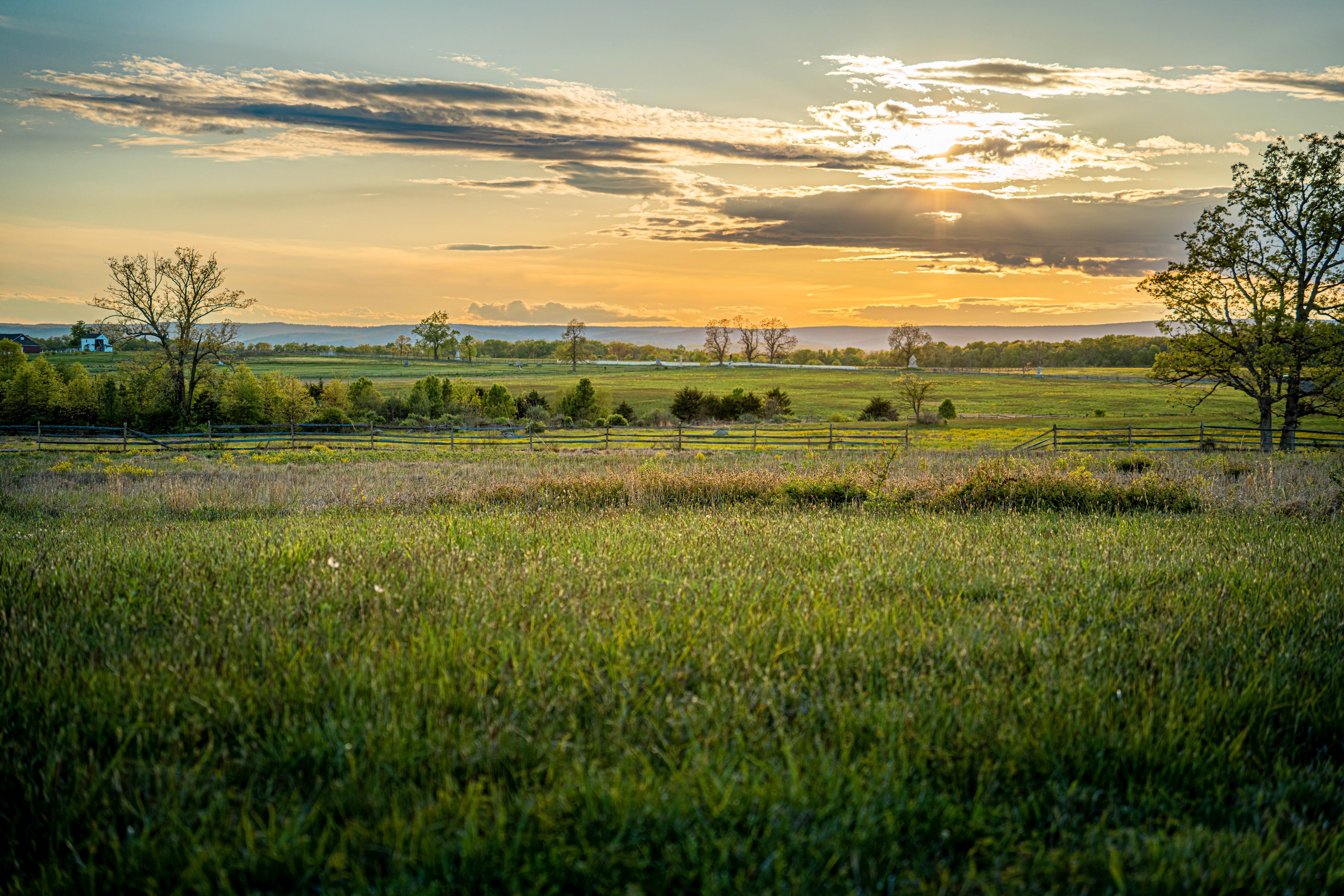
Lots to think about, for sure. All Memorial Day seems to mean for most is burgers, sitting in traffic to get to your weekend destination, the official start of summer. Lip service at best is what the day receives.
I know in the past you've mentioned some frustration about continuing to harp on a topic others seem not to care as much about, but I wanted to say earlier that in my way of seeing things, that's just your story to tell, and it is important. I'd guess that folks don't know what to say because as you mention, not many have any veteran family members. I think you've got a perspective others need to hear so that they don't get complacent.
Also, point well taken about deceased veterans versus those asking for change on the street corner. We even go so far as to tell ourselves they aren't actually veterans at all to make the scene easier to swallow.
Today should be renamed Grass Day, a day to reflect the true cost of war.
No veteran coming back from duty should be homeless, and lack proper medical care.